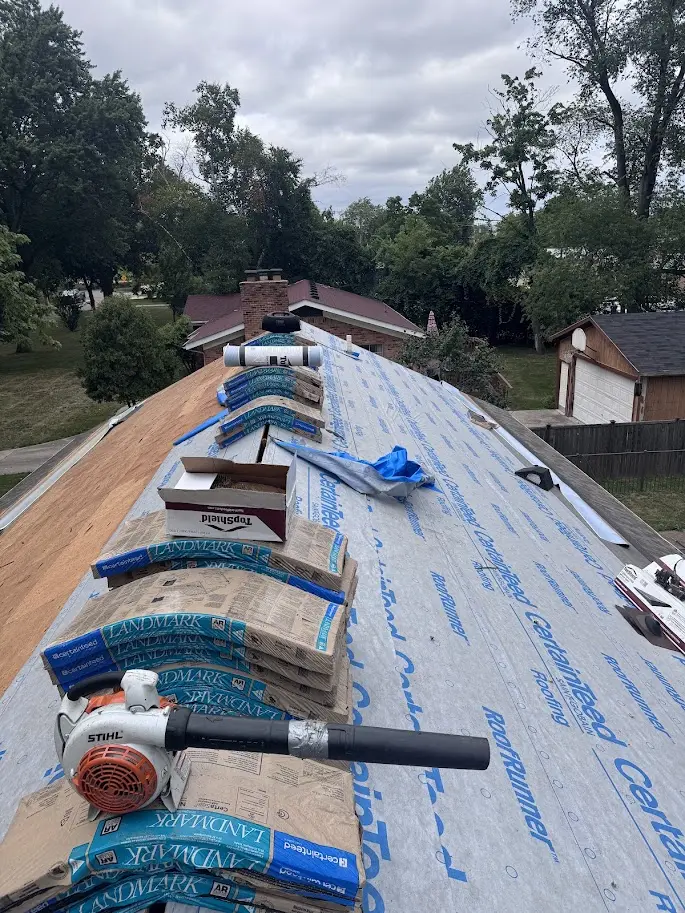
Michigan roofs face repeated freeze-thaw cycles. Snow can melt higher on the roof, run toward a colder eave, and refreeze. When that process creates an ice dam, water can back up beneath shingles at the lower portion of the roof.
A second line of protection at vulnerable edges
Self-adhered ice-and-water membrane is installed beneath the finished roof covering. Unlike ordinary underlayment, it adheres to the roof deck and seals around properly installed fasteners, helping protect the deck if water reaches beneath the shingles.
Why two courses?
Using two courses extends the protected zone farther upslope. On a typical project, that means more of the roof deck near the eaves is covered before the remaining underlayment and shingles are installed. Fuse uses this approach as a conservative detail and a greater margin of protection than the minimum detail required on many projects.
What Fuse reviews during roof preparation
- Roof deck condition after the existing covering is removed
- Eaves, valleys, penetrations, and roof-to-wall transitions
- Underlayment laps and integration with edge details
- Manufacturer installation instructions for the selected shingles
- Ventilation and other project-specific conditions
A practical standard, adjusted to the project
Two courses at the eaves are part of how Fuse typically approaches roof replacement, but the final assembly must respond to the actual roof. Applicable code, roof geometry, site conditions, and manufacturer requirements determine the appropriate installation details for each project.
This information explains Fuse Building’s typical practice and is not a warranty or a substitute for a project-specific inspection. Building requirements and manufacturer instructions control where they apply.