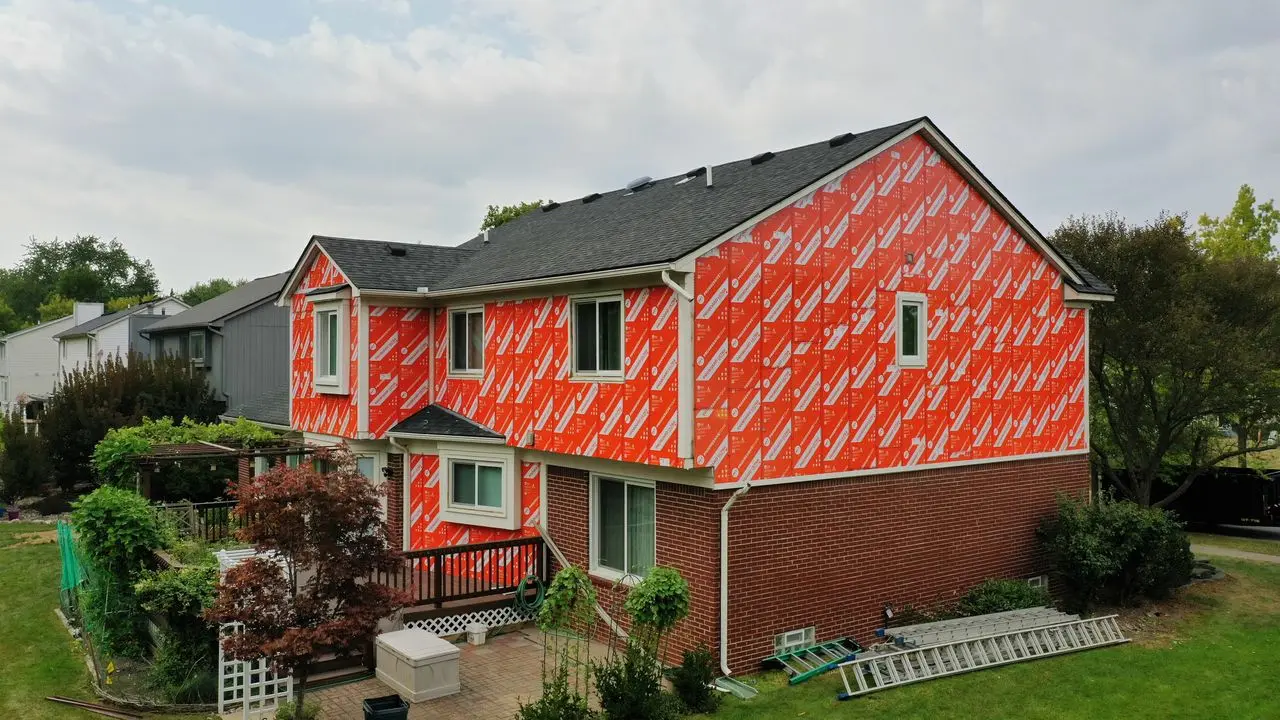
A siding project should not begin and end with choosing a color. Before the finish material goes on, the contractor should understand the condition of the wall and create a reliable drainage and fastening surface.
Inspect what the old siding was covering
Removing existing materials creates an opportunity to identify damaged sheathing, soft areas, gaps, and transitions that need attention. Covering those conditions without reviewing them can leave problems hidden behind a new exterior.
Create a sound, consistent substrate
The wall needs a suitable surface for the planned siding system. Depending on the house and product, preparation can include localized sheathing repairs, rigid insulation, or other measures that help produce a straighter and more continuous assembly.
Integrate the water-control layers
A weather-resistive barrier helps direct incidental water toward the exterior. It must be integrated with window, door, roof-wall, and penetration flashing so water is directed over each lower layer instead of behind it.
- Review windows, doors, vents, utilities, and other openings
- Maintain shingle-style laps in water-control materials
- Address roof-to-wall and lower-wall transitions
- Plan trim and starter details before covering the wall
Set the finish work up for success
Starter courses, trim, penetrations, and siding layout should be checked before installation moves too far. Careful preparation supports straighter lines, cleaner details, and a better chance for the complete wall assembly to perform as intended.
Every existing home and siding system is different. The appropriate materials and details should follow actual site conditions, the selected manufacturer’s instructions, and applicable building requirements.